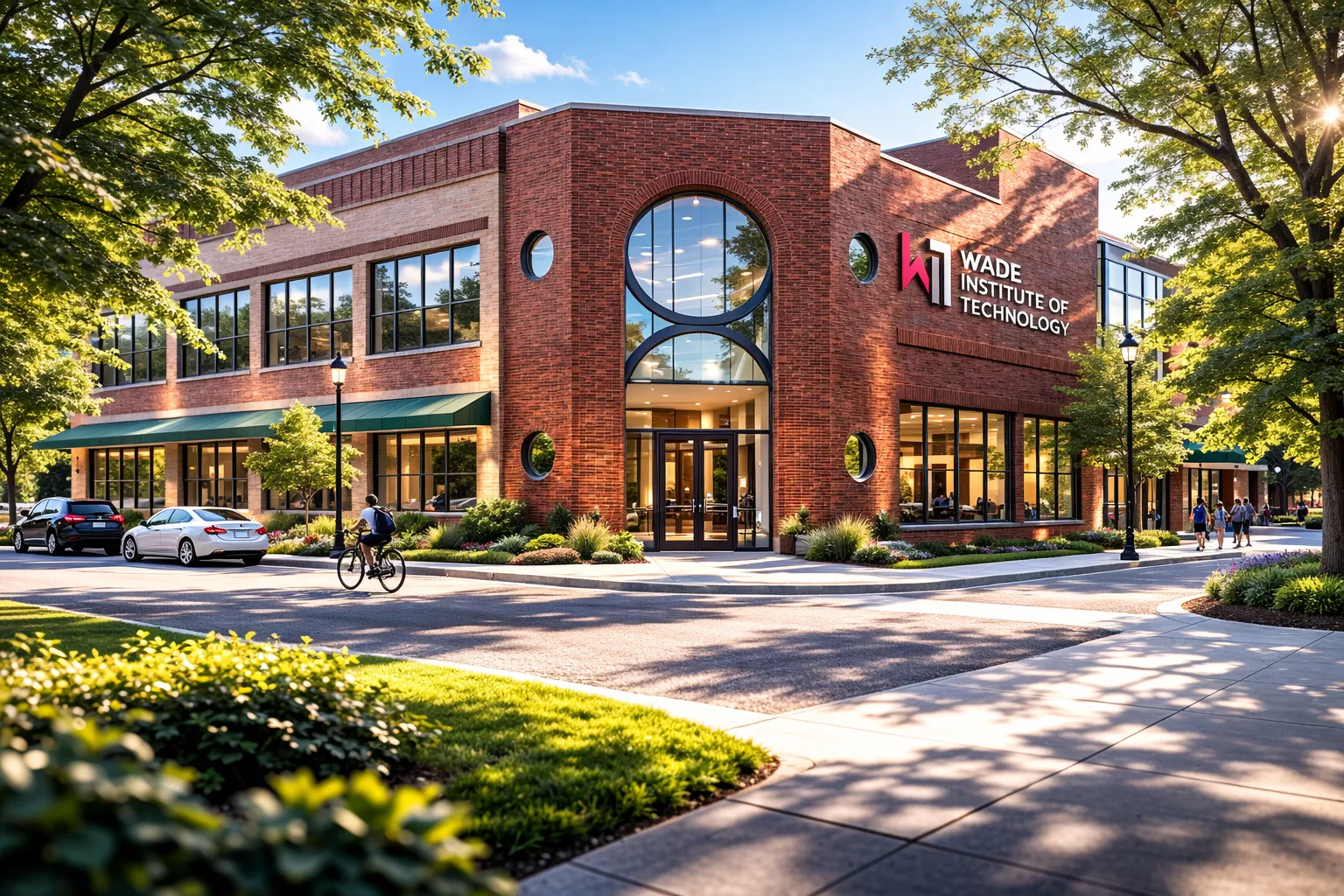
about WIT
WIT prepares talented students — particularly African Americans and people of African descent — to lead engineering-driven change.

Expanding access to engineering education for talented students who have historically been left out.
We are a private, non-profit 501(c)(3) educational institution dedicated to equipping students with the theoretical knowledge and practical skills needed to become future leaders — with a focus on students of African descent from economically disadvantaged backgrounds.
Our work focuses on addressing the challenges of poverty and creating sustainable impact in underserved communities.
WIT was founded on a simple but powerful belief: talent is universal, but opportunity is not. We exist to change that.
Acute Under-representation
The stubbornly acute under-representation of African Americans and people of African descent in the technology ecosystem is a national disgrace — and it will continue absent systemic change.
Talented individuals from low-income backgrounds remain significantly underrepresented in advanced STEM education, particularly in disciplines such as engineering, mathematics, computer science, and emerging fields like artificial intelligence. In specialized areas such as particle physics and theoretical mathematics, the number of advanced degrees awarded to these students is extremely limited.
This persistent gap highlights the urgent need to broaden access to high-level STEM education and leadership development for capable students who have historically lacked opportunity — not ability.
Enhance Scientific Knowledge
Our mission is to advance the education of talented students from economically disadvantaged backgrounds in science, technology, engineering, and mathematics.
We aim to generate, share, and apply knowledge to address critical challenges facing communities in the U.S. and across the globe.
We are committed to providing an education that combines rigorous academic study with the excitement of discovery and real-world impact.
Engineering for Everyone — Talent, Not Privilege
We envision a world where talent — not privilege — determines who leads in engineering and technology. African Americans and people of African descent have long been underrepresented in STEM fields, not for lack of ability, but for lack of access. WIT exists to change that.
WIT strives to cultivate a diverse community of scholars and leaders who contribute meaningful research, innovation, and problem-solving to society — drawing from the broadest possible pool of talent.
By fostering intellectual curiosity, rigorous inquiry, and ethical responsibility, we aim to prepare graduates to address complex challenges and create lasting impact in their communities and beyond.
Why Choose WIT’s Master’s in Engineering Management?
The WIT Master’s in Engineering Management Program is designed for non-STEM graduates seeking to bridge engineering, leadership, and project management. The program integrates engineering coursework with human-centered instruction in leadership, management, and engineering principles, preparing students to address complex industry challenges through real-world projects.
Below are ten reasons why students from all backgrounds choose to build their future at WIT.
Why Choose WIT
01
WIT fosters a close-knit learning environment where students are valued as individuals. Students are encouraged to be themselves, to take intellectual risks, and to learn collaboratively through shared experience.
02
Students learn through a combination of traditional instruction and experiential learning. This approach follows a structured learning cycle that includes concrete experience, reflective observation, abstract conceptualization, and active experimentation.
03
Small class sizes allow faculty, advisors, mentors, and tutors to provide personalized guidance and attention as students progress through their academic and professional development.
04
Students gain foundational exposure to major engineering fields by taking coursework across multiple disciplines, including aeronautics and astronautics, civil and environmental engineering, computer science, artificial intelligence, information systems, electrical engineering, materials science, and mechanical engineering.
05
While graduates are not trained as engineering technologists, WIT’s project management focus equips students to effectively communicate with and manage skilled technologists across diverse engineering domains.
06
Recognizing the importance of the humanities, the program emphasizes ethical reasoning and the role of human values in innovation, particularly where technology and society intersect.
07
Students develop analytical reasoning, independent thinking, and clear communication skills needed to address complex 21st-century challenges for the benefit of society.
08
Students study at WIT’s campus in Palo Alto, California, while gaining practical, hands-on experience through field programs in locations such as Wyoming (satellite and laser testing) and Michigan (water management initiatives).
09
Graduates have the opportunity to earn a Private Pilot License (PPL), gaining a working knowledge of aircraft maneuvering, navigation, emergency procedures, and cross-country flight planning, and positioning themselves on a potential path toward a career in aviation.
The people and partners who guide, support, and sustain WIT.
Director-Chair
B.A., University of California, Berkeley
Former Board Chair and CFO of Disability Rights California, bringing leadership experience in finance, real estate, and public policy.
Read More
Director-Vice Chair
J.D., Stanford Law School
Senior partner at an international organizational development firm, bringing leadership experience in legal advocacy, economic development, and executive coaching.
Read More
Director-Secretary
M.F.A., Television & Film Production, Academy of Art University
Chief Content Officer with a background in engineering and media production, bringing leadership experience in digital transformation, storytelling, and broadcast innovation.
Read More
Director
Ph.D., University of Reading
Former Interim Director of a Center for International Trade Development, bringing leadership experience in global trade, international education, and community engagement.
Read More
Director
Ed.D., Curriculum and Instruction, Illinois State University
M.A., Special Education, San Francisco State University
Former senior academic leader and professor, bringing leadership experience in curriculum development, faculty administration, and student-centered education.
Read More
Director
Ph.D., University of West Georgia
School Counselor Leader and mental health professional, bringing leadership experience in student development, educational leadership, and STEM pipeline advocacy.
Read More
Director
B.A., California State University, Los Angeles
Former law enforcement professional and adjunct professor, bringing leadership experience in public safety, youth development, and justice education.
Read More
Executive Director
J.D., Stanford Law School
Attorney and former public sector advisor, bringing leadership experience in law, public policy, and media infrastructure development.
Read More
Special Advisor – General Counsel
J.D., Stanford Law School
Attorney and longtime legal advisor, bringing leadership experience in real estate law, public-sector counsel, and institutional governance.
Read More
Understanding Accreditation — And Our Path Forward
Accreditation is a very important element of your education. However, many do not understand the basics of the accreditation process. Before choosing a school, it is important that you have a clear picture of exactly who accredits the school and what that accreditation means for your future. Without accreditation, you could find yourself with a degree that employers may not respect.
Most define accreditation as a status which shows the public that a school has met and is maintaining a high level of standards set by an accrediting agency. Generally, the accreditor for California-based colleges will not provide accreditation for new colleges until after the first classes of students graduate.
To be clear, we are not accredited.
Yet, that begins rather than ends our conversation.
We are working to ensure our program is academically robust to meet and exceed the requirements of existing accrediting bodies whether ACICS (Accrediting Council for Independent Colleges and Schools) or WASC (Western Association of Schools and Colleges). To this end, we will recruit well-trained and experienced faculty and acquire required facilities which should enable accreditation.
We trust this collaboration and our unique experiential learning projects will reflect our predicate that talent is universal. We are providing an opportunity and potentially a bridge to top schools.